Fashion Designer

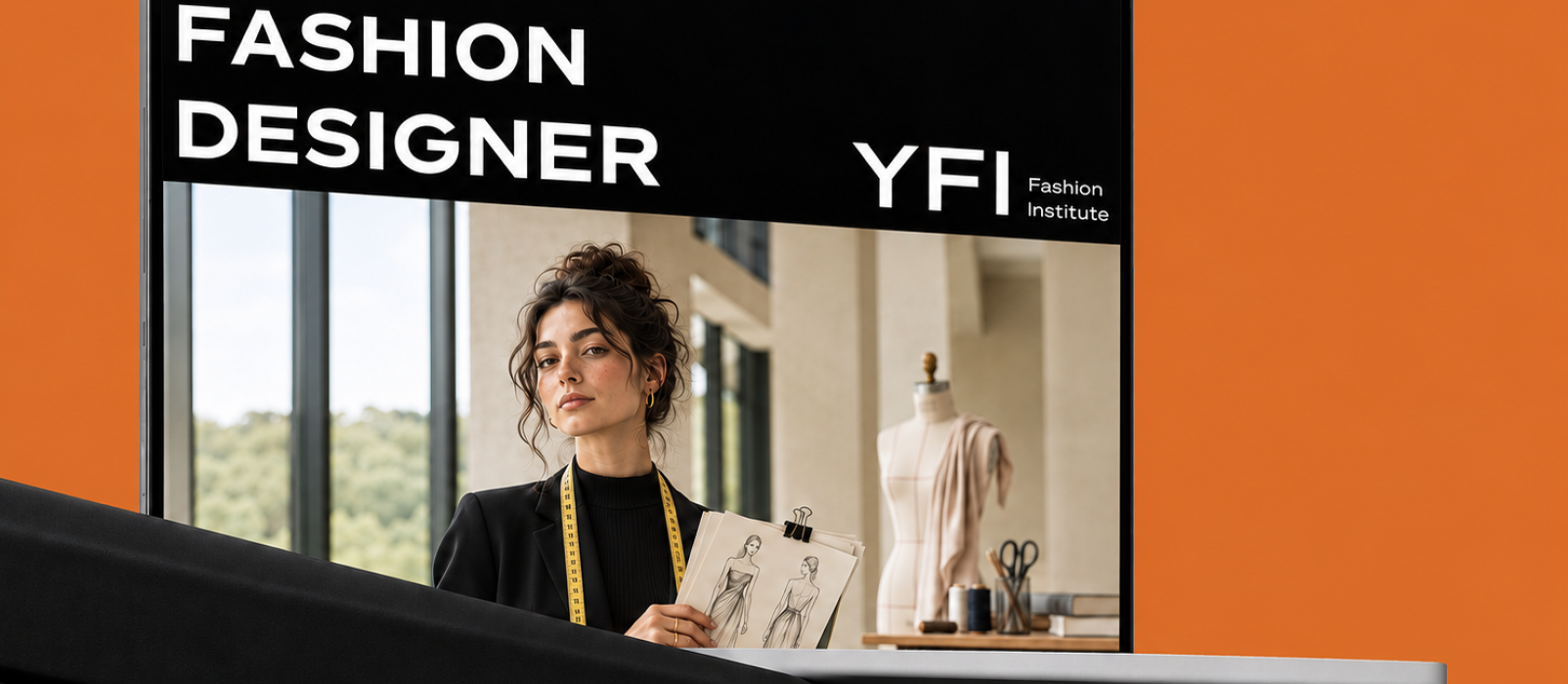
The Fashion Designer program is for people with no prior fashion experience who want to learn fashion design, from the first sketch to their own professional mini-collection.
Course Description
The Fashion Designer certificate program takes complete beginners and career changers from basic skills to a finished, professional-quality mini-collection. It follows a “learn by making” model: every week produces a tangible result, and every module ends with a project that proves a new capability. Your first garment is finished in Month 4.
The program runs for 18 months and consists of 6 modules of 12 teaching weeks each (72 weeks and 864 contact hours in total). Learning is in-person and studio-based, with digital lab sessions for CAD and portfolio work. Cohorts have up to 25 students. Classes are taught in Armenian, English, or Russian, depending on the instructor.
All materials and equipment needed during the studies are provided by the Institute. The costs of the graduation work and showcase (fabrics, trims, and so on) are covered by the students.
The curriculum combines drawing, pattern making, garment construction, draping, digital tools, collection planning, and business skills. It draws on Armenia’s textile, embroidery, and ornamental heritage, so graduates can develop a distinctive design identity for local and international markets.
What Skills Will You Gain?
You will learn to draw the fashion figure, work with color and fabric, take measurements, draft core blocks, and sew a skirt, a top, and trousers. You will drape on the mannequin, construct lined and more complex garments, and apply refined finishing techniques.
You will master digital illustration (vector software and Photoshop), technical flats, and tech packs, so that a factory or sample room can produce your design without guesswork. You will also learn to research a market, plan and cost a collection, define a brand identity, and apply sustainable and ethical sourcing practices. By the end, you will present a professional portfolio and pitch your work to industry audiences.
Program Outcomes
Upon completion, graduates will be able to:
- Communicate design ideas through sketching, color, and fabric knowledge
- Draft patterns and sew garments to a clean, professional standard
- Translate designs into three-dimensional forms on the mannequin and complete more complex garments
- Produce digital illustrations, technical flats, and tech packs
- Plan and cost a collection and define a brand identity
- Realize a finished mini-collection and present it to the public and industry professionals
Throughout the program, students also develop the ability to work independently and meet deadlines, give and receive constructive critique, and apply sustainable and ethical design thinking.
What Will You Learn?
The program consists of 6 modules:
Module 1: Fashion Foundations (Months 1-3)
FD-101 Fashion Drawing and Color Theory: fashion drawing and figure proportions, color theory and palettes, rendering of garments and fabrics.
FD-102 Textiles and Fashion History: fibers and fabric structures, fabric testing, fashion history, Armenian traditional dress, embroidery, and ornament.
Module 2: Pattern Making and Garment Construction (Months 4-6)
FD-201 Basic Pattern Making: body measurement, skirt, bodice, sleeve, and trouser blocks, pattern production and labeling.
FD-202 Garment Construction I: machine sewing, seam types, zippers, fitting, quality inspection.
Module 3: Draping and Advanced Construction (Months 7-9)
FD-301 Draping on the Mannequin: draping basics, gathers and pleats, cowl and bias, converting a drape into a pattern.
FD-302 Garment Construction II: interfacing, underlining and linings, collars and pockets, couture finishing.
Module 4: Digital Design and Technical Documentation (Months 10-12)
FD-401 Digital Fashion Illustration: vector graphics, Photoshop, digital rendering of garments and fabrics, presentation boards.
FD-402 Technical Flats and Tech Packs: technical flats, size tables and grading, bill of materials (BOM), tech pack assembly.
Module 5: Collection Development and Fashion Business (Months 13-15)
FD-501 Research and Collection Planning: design identity and concept, trend research, line planning, prototype toiles.
FD-502 Costing, Branding and Sustainable Sourcing: target customer, brand identity, sourcing and sustainable materials, costing, pricing, sales channels, business plan basics.
Module 6: Capstone and Professional Practice (Months 16-18)
FD-601 Capstone Collection Studio: Signature Mini-Collection production under studio supervision, fittings and production planning, tech pack.
FD-602 Portfolio and Professional Practice: portfolio, lookbook, interview and pitching skills, freelance and intellectual property basics.
Electives
Students can choose any three electives free of charge:
- FD-E01 Embroidery and Textile Heritage
- FD-E02 Knitwear Basics
- FD-E03 Advanced Fashion Illustration
- FD-E04 3D Garment Design (CLO3D)
- FD-E05 Fashion Photography and Styling
- FD-E06 Sustainable Fashion and Upcycling
- FD-E07 Fashion Marketing and Social Media
- FD-E08 Tailoring and Menswear Essentials
Who Is This Course For?
The program is designed for beginners. No prior sewing or drawing skills are needed.
Career changers: adults who want to start a new career in fashion.
School leavers: young people looking for a practical start in a creative profession.
Aspiring entrepreneurs: those who dream of founding their own label.
Admission
Requirements: age 18 or over, completed secondary education, basic computer literacy, and technical drawing skills.
Admission stages:
- CV and portfolio. Applicants submit their CV. A portfolio is not required but is welcome.
- Technical drawing exam. Applicants complete a technical drawing task. Language certificates. Applicants submit certificates confirming their language proficiency.
- Interview. An interview with representatives of the Institute.
Based on the admission results, a cohort of up to 25 students will be formed.
Time commitment: classes are held on Monday, Wednesday, and Friday (half days), and on Saturday as a full studio-based day. In addition, students should plan 4-6 hours of independent work per week. (The schedule may be changed.)
Program Goals
- Give beginners every core skill, from drawing to finished garments
- Provide hands-on practice in the sewing studio, the draping room, and the digital lab
- Connect students with experienced industry professionals through juries, visits, and guest sessions
- Help students develop a distinctive design identity inspired by Armenian heritage
Your Investment
18-month Fashion Designer program: 175.000 AMD / month
Materials and equipment needed during the studies are included. The costs of the graduation work and showcase are covered by the students.
Certificate
Students who pass all six modules and attend at least 80% of sessions receive the Fashion Designer certificate.
Duration: 18 months